

How to Create a Business Continuity Strategy Focused on Human Capital Risks
Human capital represents your organization’s most valuable and vulnerable asset. Employees drive innovation, serve customers, and maintain critical operations daily. However, unexpected workforce disruptions can halt business functions faster than equipment failures or technology outages.
A comprehensive business continuity strategy addressing human capital risks protects your organization from talent losses, knowledge gaps, and operational breakdowns. This guide provides actionable steps for developing resilient workforce planning that safeguards business operations.
Understanding Human Capital Risks in Business Continuity
Human capital risks encompass any threats affecting workforce availability, productivity, or capability. These risks range from sudden employee departures to health crises affecting multiple team members. Additionally, skill shortages and burnout create gradual but equally damaging impacts.
Traditional business continuity planning focuses heavily on technology and infrastructure. Nevertheless, organizations cannot function without people operating systems, serving customers, and making decisions. Therefore, human-centered continuity planning deserves equal priority.
Common human capital risks include unexpected resignations of key personnel, workplace accidents or illnesses, mass turnover events, succession planning failures, and knowledge loss from retirements. Moreover, external events like pandemics or natural disasters can suddenly eliminate workforce availability.
Organizations that ignore human capital risks face severe consequences. Projects stall when critical knowledge resides with single individuals. Customer service deteriorates when experienced staff depart without proper transitions. Furthermore, competitive advantages disappear when specialized skills walk out the door.
Conducting a Human Capital Risk Assessment
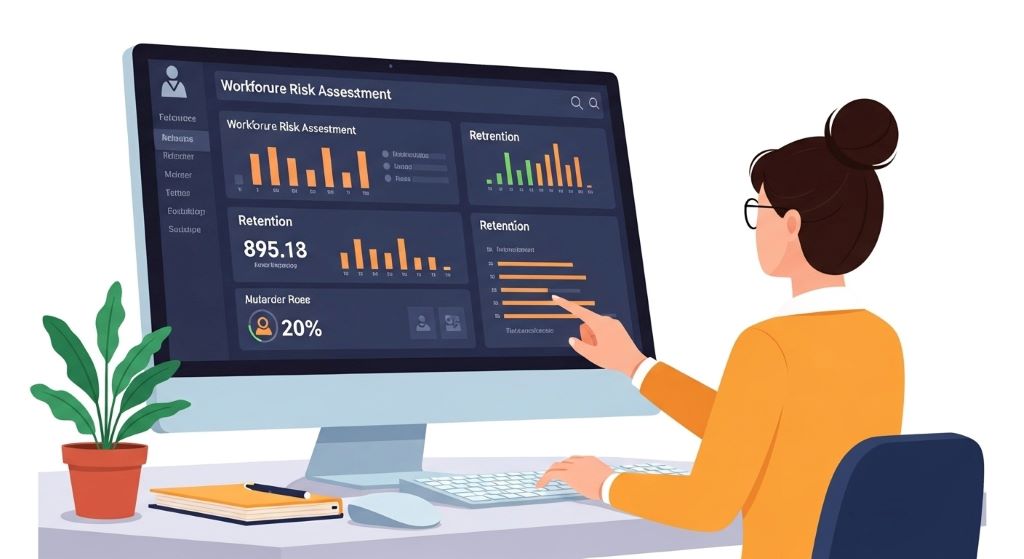
Begin by identifying critical roles essential for core business functions. Map which positions directly impact revenue generation, customer satisfaction, regulatory compliance, and operational continuity. These roles become priorities in your continuity strategy.
Evaluate single points of failure where one person holds irreplaceable knowledge or skills. Document specialized expertise, critical relationships, and institutional knowledge concentrated in individual employees. Additionally, assess how long operations could continue if these individuals became unavailable.
Analyze workforce demographics for retirement risks. Identify departments where significant percentages of employees approach retirement age. Calculate potential knowledge loss if multiple experienced workers retire simultaneously. Therefore, succession planning becomes crucial for these areas.
Review historical turnover patterns to identify vulnerability trends. High turnover in specific roles or departments signals underlying risks requiring attention. Moreover, exit interview data reveals whether departures stem from preventable issues like inadequate training or poor management.
According to Harvard Business Review, toxic workplace culture ranks as the strongest predictor of employee turnover, making cultural assessment essential for risk evaluation.
Consider external factors affecting workforce availability. Geographic concentration creates vulnerability to regional disasters. Reliance on specialized talent pools exposes organizations to market competition. Furthermore, regulatory changes may suddenly require new skills or certifications.
Developing Knowledge Management Systems
Implement comprehensive documentation processes capturing critical institutional knowledge. Create standard operating procedures for all essential functions. Video recordings of complex processes preserve knowledge better than written instructions alone. Additionally, regular updates keep documentation current and relevant.
Establish mentoring programs pairing experienced employees with successors. Structured knowledge transfer prevents information loss during transitions. These programs also strengthen employee engagement and retention. Therefore, mentoring serves dual purposes in continuity planning.
Deploy collaborative platforms enabling knowledge sharing across teams. Cloud-based systems ensure information accessibility regardless of individual availability. Wikis, shared drives, and project management tools centralize organizational knowledge. Moreover, search functionality helps employees quickly locate needed information.
Schedule regular knowledge audits identifying gaps in documentation. Review which processes lack written procedures or backup personnel. Prioritize documenting high-risk areas first, then systematically address remaining gaps. Furthermore, assign documentation responsibilities to subject matter experts.
Create cross-training matrices showing which team members can perform critical functions. Visual representations reveal coverage gaps and single points of failure. Use these matrices to guide cross-training initiatives strategically.
Building Workforce Redundancy and Flexibility
Develop succession plans for all critical positions, not just executive roles. Identify potential successors and create development plans building required competencies. Regular reviews ensure successors remain prepared for transitions. Additionally, transparent succession planning increases employee retention by demonstrating career opportunities.
Implement cross-training programs creating backup capabilities for essential functions. Employees should learn adjacent roles within their departments. This flexibility allows workload redistribution during absences or departures. However, balance cross-training with specialization to maintain expertise depth.
Maintain relationships with contingent workforce providers for rapid scaling. Pre-qualified temporary agencies, consultants, and contractors enable quick response to sudden staffing needs. Established agreements eliminate delays during emergencies. Therefore, these relationships function as workforce insurance.
Consider distributed team structures reducing geographic concentration risks. Remote work capabilities proved essential during recent pandemic disruptions. Organizations with established remote infrastructure adapted faster than those requiring physical presence. Moreover, geographic diversity protects against regional disasters.
Develop alumni networks maintaining connections with former employees. Quality past employees often return when opportunities arise. These individuals require less onboarding and already understand organizational culture. Furthermore, alumni can provide temporary support during emergencies.
Creating Talent Pipeline Strategies
Establish ongoing recruitment for critical roles rather than hiring only when vacancies occur. Continuous talent pipeline development ensures qualified candidates exist when needs arise. Maintain relationships with potential hires through networking and industry engagement. Additionally, passive candidate pools reduce time-to-fill metrics.
Partner with educational institutions developing future talent. Internship programs create pipelines of trained, culture-familiar candidates. Scholarship programs and advisory board participation strengthen institutional relationships. Therefore, these investments yield long-term talent security.
Build employer brand attracting quality candidates consistently. Strong reputations reduce recruitment difficulty and accelerate hiring processes. Employee advocacy programs amplify positive messaging authentically. Moreover, award recognition and thought leadership enhance employer attractiveness.
Implement employee referral programs leveraging existing workforce networks. Current employees often know qualified candidates matching organizational culture. Referral bonuses incentivize active participation in talent acquisition. Furthermore, referred candidates typically demonstrate higher retention rates.
Develop internal mobility programs promoting from within whenever possible. Internal candidates understand organizational context and require less onboarding. Career development opportunities increase retention by demonstrating advancement possibilities. Additionally, internal promotion preserves institutional knowledge within the organization.
Implementing Retention and Engagement Initiatives
Conduct regular employee engagement surveys identifying dissatisfaction before it triggers departures. Anonymous feedback reveals issues employees hesitate to raise directly. Analyze results by department, role, and demographic to identify targeted interventions. Therefore, proactive engagement management prevents turnover.
Create competitive compensation and benefits packages reducing financial departure motivations. Regular market analyses ensure offerings remain competitive. Total rewards communication helps employees appreciate full compensation value. Moreover, flexible benefits accommodate diverse workforce needs.
Invest in professional development demonstrating commitment to employee growth. Training budgets, conference attendance, and certification support increase engagement and capability simultaneously. Career pathing conversations align individual aspirations with organizational needs. Additionally, development opportunities often outweigh salary in retention decisions.
Foster positive workplace culture through intentional management practices. Train leaders in effective communication, recognition, and conflict resolution. Address toxic behaviors immediately to prevent cultural deterioration. Furthermore, values-aligned culture attracts and retains like-minded talent.
According to McKinsey research, organizations with highly engaged employees see 21 percent higher profitability and significantly lower turnover rates.
Implement recognition programs acknowledging contributions and achievements. Regular appreciation increases emotional connection to organizations. Peer recognition programs amplify positive culture beyond management acknowledgment. Therefore, recognition becomes a retention tool requiring minimal financial investment.
Establishing Emergency Response Protocols
Develop communication plans for rapid workforce mobilization during crises. Contact information databases enable quick outreach to all employees. Multiple communication channels ensure message delivery despite individual preferences or circumstances. Additionally, communication templates accelerate crisis response.
Create decision-making frameworks clarifying authority during emergencies. Predetermined protocols eliminate confusion when rapid decisions become necessary. Backup decision-makers ensure continuity if primary leaders become unavailable. Moreover, documented frameworks provide legal protection for emergency actions.
Establish health and safety protocols protecting workforce wellbeing. Pandemic response plans, workplace violence procedures, and mental health resources demonstrate employee care. These protocols also facilitate faster recovery from disruptive events. Furthermore, visible safety commitment enhances employer brand.
Implement business continuity drills testing workforce response capabilities. Tabletop exercises reveal gaps in planning and communication. Regular practice builds confidence and muscle memory for emergency situations. Therefore, drills transform theoretical plans into practical preparedness.
Designate crisis management teams with clearly defined roles and responsibilities. Include human resources, operations, communications, and legal representation. Regular meetings maintain team readiness and plan currency. Additionally, crisis team members should receive specialized training.
Monitoring and Updating Your Strategy
Schedule quarterly reviews of human capital risk assessments. Workforce dynamics change constantly, requiring regular reassessment. New hires, departures, and role changes alter risk profiles continuously. Therefore, static plans quickly become obsolete.
Track leading indicators predicting potential workforce disruptions. Monitor turnover rates, absenteeism patterns, engagement scores, and recruitment metrics. Trending data reveals emerging risks before they create crises. Moreover, predictive analytics enable proactive interventions.
Conduct post-incident reviews after any workforce disruption. Analyze response effectiveness and identify improvement opportunities. Document lessons learned and update procedures accordingly. Furthermore, transparent review processes demonstrate commitment to continuous improvement.
Maintain compliance with evolving employment regulations affecting continuity planning. Legal requirements around succession, documentation, and emergency protocols vary by jurisdiction. Regular legal reviews ensure strategy alignment with current obligations. Additionally, compliance reduces liability risks.
Engage leadership in annual strategy presentations maintaining executive support. Business continuity requires ongoing resource allocation and priority maintenance. Executive understanding ensures necessary budget approvals and cultural emphasis. Therefore, leadership engagement proves essential for strategy success.
Integrating Technology Supporting Human Capital Continuity
Deploy human resource information systems centralizing workforce data. Integrated platforms provide real-time visibility into staffing levels, skills inventories, and succession readiness. Analytics capabilities identify trends and predict risks. Moreover, cloud-based systems ensure data accessibility during disruptions.
Implement learning management systems supporting continuous skill development. Online training enables rapid upskilling when role requirements change. Certification tracking ensures compliance and capability visibility. Additionally, learning platforms facilitate onboarding efficiency.
Utilize collaboration tools maintaining productivity during distributed work. Video conferencing, project management software, and instant messaging enable remote operations. These technologies proved critical during pandemic responses. Furthermore, collaboration infrastructure supports flexible work arrangements reducing turnover.
Consider artificial intelligence applications identifying workforce risks. Predictive models analyze multiple variables forecasting turnover probability. Natural language processing evaluates employee sentiment in communications. Therefore, AI augments human judgment in risk assessment.
Conclusion
Creating a business continuity strategy focused on human capital risks protects organizations from their most significant vulnerability. Comprehensive risk assessment identifies critical roles and knowledge gaps requiring attention. Knowledge management, workforce redundancy, and talent pipelines create resilience against disruptions. Additionally, retention initiatives reduce preventable turnover while emergency protocols enable rapid crisis response. Regular monitoring and technology integration maintain strategy effectiveness over time. Therefore, human-centered continuity planning ensures organizations survive and thrive through inevitable workforce challenges. The investment in people-focused business continuity delivers returns through reduced disruption costs, maintained operations, and competitive advantages in talent markets.
Frequently Asked Questions
What is human capital risk in business continuity planning?
Human capital risk refers to threats affecting workforce availability, capability, or productivity that could disrupt business operations. These risks include unexpected employee departures, knowledge loss, skill shortages, health crises, and turnover events that compromise organizational continuity and performance.
How often should organizations update their human capital continuity strategy?
Organizations should conduct comprehensive reviews quarterly and update strategies annually at minimum. However, immediate updates are necessary after significant workforce changes, major turnover events, organizational restructuring, or external crises affecting employee availability or business operations.
What are the most critical elements of a human capital continuity plan?
Critical elements include succession planning for key roles, comprehensive knowledge documentation, cross-training programs, talent pipeline development, employee retention initiatives, emergency communication protocols, and regular risk assessments identifying vulnerabilities before they create operational disruptions.
How can small businesses implement human capital continuity strategies with limited resources?
Small businesses should prioritize documenting critical processes, cross-training employees on essential functions, maintaining strong company culture to reduce turnover, building relationships with temporary staffing agencies, and creating simple succession plans for owner and key employee roles.
What metrics measure human capital continuity strategy effectiveness?
Key metrics include turnover rates for critical positions, average time-to-fill for essential roles, knowledge documentation completion percentages, cross-training coverage ratios, employee engagement scores, succession readiness ratings, and business recovery time following workforce disruptions.
Related Topics:
Robo-Advisors vs Human Financial Planners: Which Wins for Millennials?
Tokenomics of Emerging Cryptocurrency Projects: A Story of Value and Vision