

Florida lawns don’t follow the same rhythm as lawns in Ohio or Oregon. Warm-season grasses like St. Augustine, Zoysia, and Bahia grow nearly year-round in the peninsula, which means the calendar most lawn care guides assume simply doesn’t apply. If you’ve been following advice written for a northern climate, that’s likely why your grass looks thin in spring or stressed in August. For homeowners curious about automating the mow-and-maintain cycle, a hands-on Segway Navimow i110N review is worth reading alongside this calendar, since robotic mowers behave differently depending on the season. What follows is a practical month-by-month plan built around Florida’s actual growing conditions.
Quick Answer
Florida lawns need a seasonal plan built around three realities: a long warm growing season, a short cool dormancy period, and heavy summer rain. Fertilize mainly from spring through early fall, avoid high-nitrogen feeding in late fall and winter, mow higher in summer to shade roots, water deeply but less often, and watch for chinch bugs and large patch disease during humid months. Adjust each task to your grass type and USDA zone.
Key Takeaways
- Florida’s warm-season grasses grow most vigorously from March through October, so most fertilization, mowing, and dethatching happens in that window.
- Winter is not a full shutdown in South Florida. Grass may slow down but rarely goes fully dormant, so light maintenance continues.
- Watering deeply two to three times per week beats daily light sprinkling, especially on sandy or high-drainage soil.
- Chinch bugs, mole crickets, and large patch fungus are the main seasonal threats, and each has a specific vulnerable window.
- Mowing height and frequency matter more in summer than almost any other single factor.
Why Florida Lawn Care Doesn’t Follow a National Calendar
Most generic lawn calendars are written for cool-season grasses like fescue and Kentucky bluegrass, which peak in spring and fall and go dormant in summer heat. Florida is the opposite. Warm-season grasses thrive in heat and slow down when temperatures drop. That means the busiest lawn care months in Florida are late spring through early fall, while the quiet period is December through February.
Your specific location within Florida also changes the schedule. North Florida (roughly USDA zones 8b–9a) gets occasional freezes and a real dormancy period. Central Florida (zones 9b–10a) sees mild winters with some slowdown. South Florida (zones 10b–11) has lawns that stay green most of the year. Treat these as three different calendars rather than one statewide plan, Maintaining a thriving outdoor space requires reliable tools and management systems, much like discovering the right resources when exploring where to find business software in michigan for your local operations.
Spring (March–May): Wake the Lawn Up Gradually
Spring is when warm-season grass breaks dormancy and starts pushing new growth. The temptation is to fertilize heavily and mow short right away. Resist both. Grass emerging from dormancy has a shallow active root system, and aggressive early feeding or scalping stresses it.
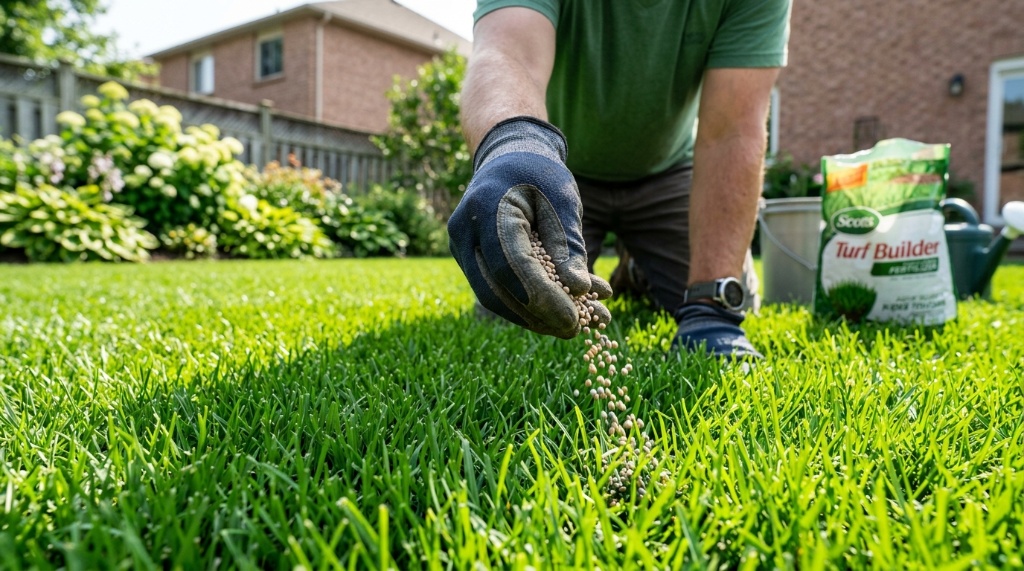
By mid-to-late March, once you see consistent new green growth and the last frost risk has passed in your area, apply a slow-release nitrogen fertilizer at a rate appropriate for your grass type and soil test. If you haven’t tested your soil in three years, spring is a good time. Florida soils are often sandy and low in organic matter, and soil tests reveal whether you also need phosphorus, potassium, or lime.
This is also the window for pre-emergent herbicide if you battle crabgrass or other summer annual weeds. Timing matters: pre-emergents must go down before weed seeds germinate, which in much of Florida happens in late winter or early spring. Miss that window and the product won’t help.
Spring checklist
- Rake or lightly dethatch to remove dead material if the lawn is matted.
- Apply slow-release fertilizer after green-up begins.
- Apply pre-emergent herbicide before soil temperatures consistently hit the germination threshold for summer weeds.
- Sharpen mower blades. Dull blades tear grass and invite disease.
- Check irrigation heads for clogs or misalignment before summer demand ramps up.
Summer (June–September): The Pressure Test
Summer is when Florida lawns either look great or fall apart, and the difference usually comes down to water, mowing height, and pest scouting. Heat and humidity stress grass while also creating ideal conditions for disease and insects.
Mow high. For St. Augustine, that generally means three to four inches. For Zoysia, two to three inches. Taller grass shades the soil, reduces water evaporation, and supports deeper roots. Cutting too short in summer exposes the soil to direct sun and stresses the plant.
Water deeply but not daily. Two to three times per week, applying enough to wet the soil several inches down, encourages deep roots. Daily light watering does the opposite: it trains shallow roots that collapse under heat stress. Early morning watering reduces evaporation and gives the grass time to dry before evening, which helps prevent fungal problems.
Watch for chinch bugs in St. Augustine lawns, especially in hot, dry patches near sidewalks and driveways. Their damage looks like irregular yellowing that spreads. Mole crickets are more of a problem in Bahia and Bermuda lawns, and their tunneling loosens soil and uproots grass. Large patch fungus shows up as circular brown patches that expand in humid weather, often after heavy rain. Each problem has a different treatment, so identify the cause before spraying anything.
Fall (October–November): Transition, Not Shutdown
Growth slows in fall, but this is not the time to stop caring for the lawn. In North and Central Florida, grass is still active through October in most years. In South Florida, growth continues even longer.
Apply a fall fertilizer with lower nitrogen and higher potassium to support root health and stress tolerance heading into winter. Avoid heavy nitrogen applications now, since they push tender new growth that cold weather can damage. Continue mowing at the same height rather than dropping it for winter, at least until growth clearly slows.
Fall is also a good time to address any compaction issues with core aeration, especially if your lawn gets heavy foot traffic. Overseeding is generally not recommended for warm-season Florida lawns unless you’re intentionally overseeding with ryegrass for winter color, which is a separate decision with its own trade-offs.
Winter (December–February): Manage, Don’t Ignore
In North Florida, lawns may go fully dormant and turn brown. In Central and South Florida, they mostly just slow down. Either way, the goal is to protect the lawn, not push growth.
Stop fertilizing nitrogen-heavy products. Cool temperatures slow nutrient uptake, and unused nitrogen can leach into groundwater or feed winter weeds. If you water at all, do it sparingly, since grass needs far less moisture now and overwatering in cool weather promotes fungus and root rot.
Mow only as needed to keep the lawn tidy, and avoid walking on frozen or frost-covered grass, which can damage blades. This is also a good season to service equipment, plan spring soil tests, and evaluate whether your current lawn care routine is actually working.
Common Florida Lawn Care Mistakes
- Following a northern lawn calendar. Applying spring fertilizer in February or skipping winter care entirely both cause problems in Florida.
- Mowing too short in summer. Scalping stresses grass and invites weeds and disease.
- Watering daily. Frequent shallow watering creates weak roots and fungal issues.
- Ignoring pest damage. Chinch bug and mole cricket damage spreads fast if not identified and treated.
- Over-fertilizing in fall. Pushing growth into winter leaves grass vulnerable to cold damage.
- Skipping soil tests. Florida soils vary widely, and guessing at fertilizer needs often wastes money or damages the lawn.
Frequently Asked Questions
How often should I mow my Florida lawn in summer?
In peak summer growth, most Florida lawns need mowing every seven to ten days. Weekly mowing is common. Never remove more than one-third of the blade height in a single cut, since that stresses the grass.
Do I need to fertilize my Florida lawn in winter?
Generally no. Warm-season grasses are dormant or semi-dormant, and nitrogen fertilizer in winter can encourage weak growth, feed weeds, or leach away. A light potassium-focused product in late fall is usually enough.
What is the best watering schedule for a Florida lawn?
Two to three deep waterings per week during the growing season, applied early in the morning. In winter, cut back significantly, sometimes to once every two weeks or less depending on rainfall and grass type.
How do I know if my lawn has chinch bugs or disease?
Chinch bug damage tends to appear in hot, dry spots and spreads outward. Fungal damage like large patch often shows up in roughly circular patches after humid or rainy weather. Look at the pattern, check the soil and grass at the edge of the damage, and treat based on the actual cause.
Can I overseed a Florida lawn in fall?
For permanent warm-season grasses, overseeding is usually discouraged because it competes with the existing lawn. Some homeowners overseed with annual ryegrass for winter color, but this is a cosmetic choice with maintenance trade-offs.
Does lawn care change between North and South Florida?
Yes. North Florida lawns go dormant in winter and need real cold protection. South Florida lawns stay greener year-round and need lighter but more consistent maintenance. Central Florida falls in between.
Conclusion
Florida lawn care is less about following a national template and more about working with a long warm season, a short dormancy, and heavy summer humidity. Fertilize mainly in spring through early fall, mow high in summer, water deeply and less often, and stay alert for chinch bugs and fungus during the hottest months. Adjust the calendar for your region, and test your soil before guessing at fertilizer needs. A consistent seasonal routine will outperform any single product or shortcut.